Money and Behaviour
WIRED TO SPEND
How to Rewire Your Defaults, Escape the Cycle, and Make Wealth Automatic
For people who know what to do and still don’t do it.
Why it matters
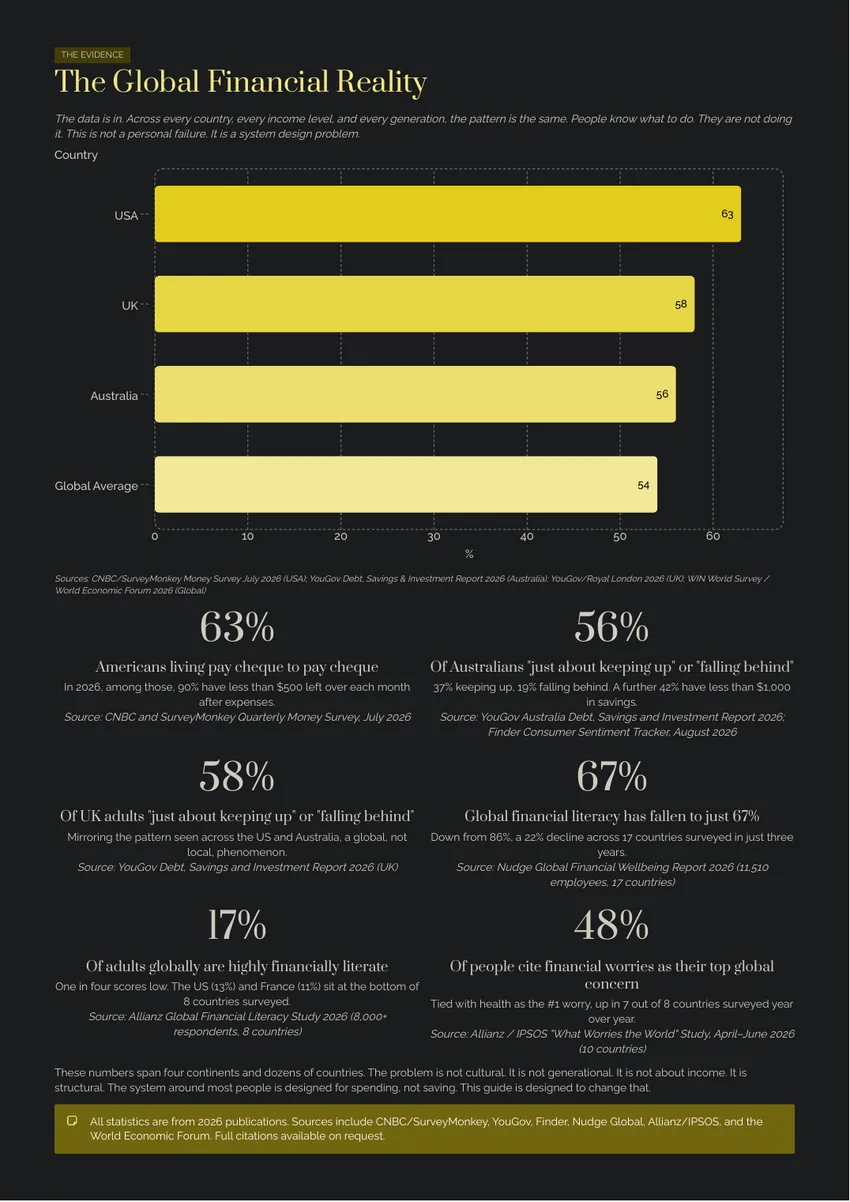
58%
of adults across the US, UK and Australia say they are just keeping up or falling behind
YouGov, CNBC 2026
67%
global financial literacy, down from 86% in three years across 17 countries
Nudge Global 2026
17%
of adults worldwide score as highly financially literate
Allianz 2026
This is for you if
You earn enough but there is nothing left at the end of the month
You have read the books, watched the videos, and still nothing changes
You feel shame about money but do not know where it comes from
You keep saying "next month" and next month never arrives
You know what to do. You just cannot make yourself do it consistently
What is inside
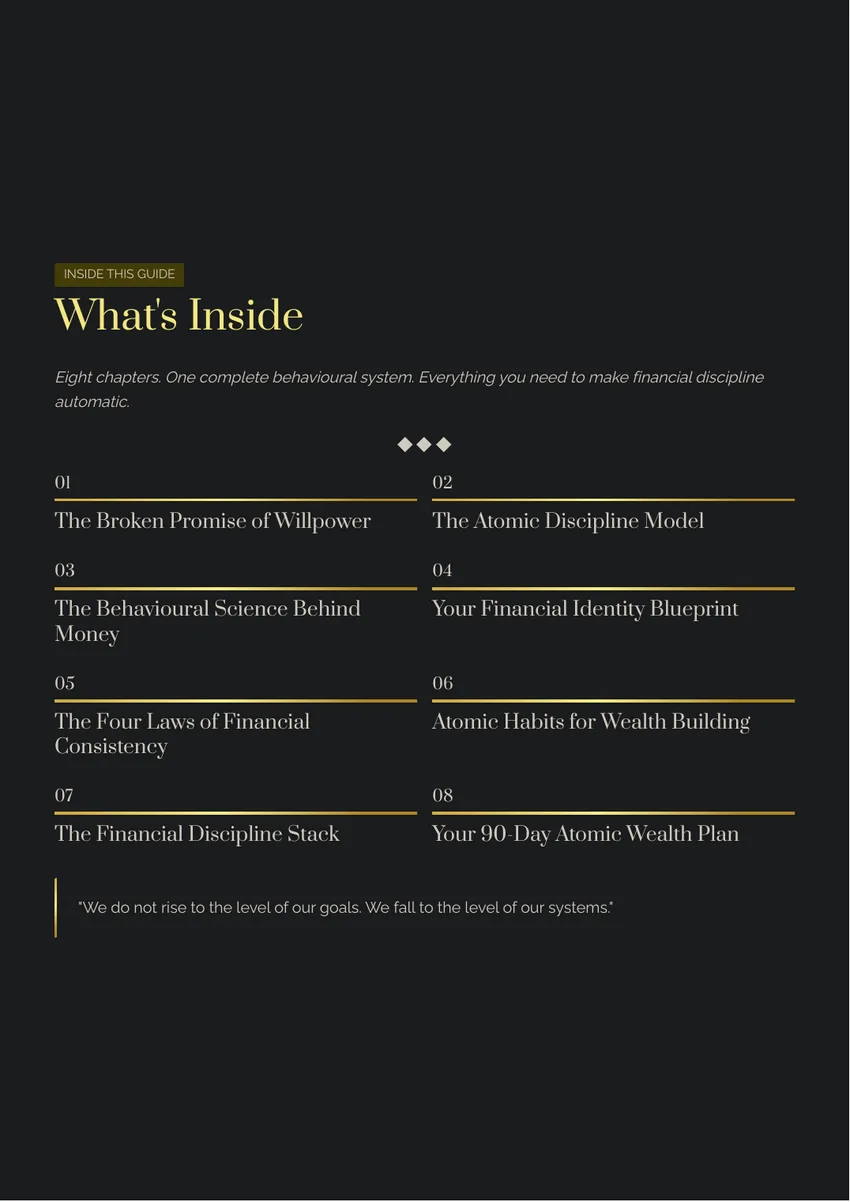
The Broken Promise of Willpower
Why relying on self control is the most expensive mistake you can make
The Atomic Discipline Model
A five pillar behavioural framework for financial consistency
The Behavioural Science Behind Money
The cognitive biases that drain wealth without you noticing
Your Financial Identity Blueprint
Redesign how you see yourself with money
The Four Laws of Financial Consistency
Make the right behaviour automatic and the wrong one difficult
Atomic Habits for Wealth Building
Small systems that compound into real financial change
The Financial Discipline Stack
Layer your habits so one supports the next
Your 90 Day Atomic Wealth Plan
A working document you build as you go
A taste of the guide
A look inside
A few pages to show you the thinking and the craft. The frameworks themselves are inside.


From the author
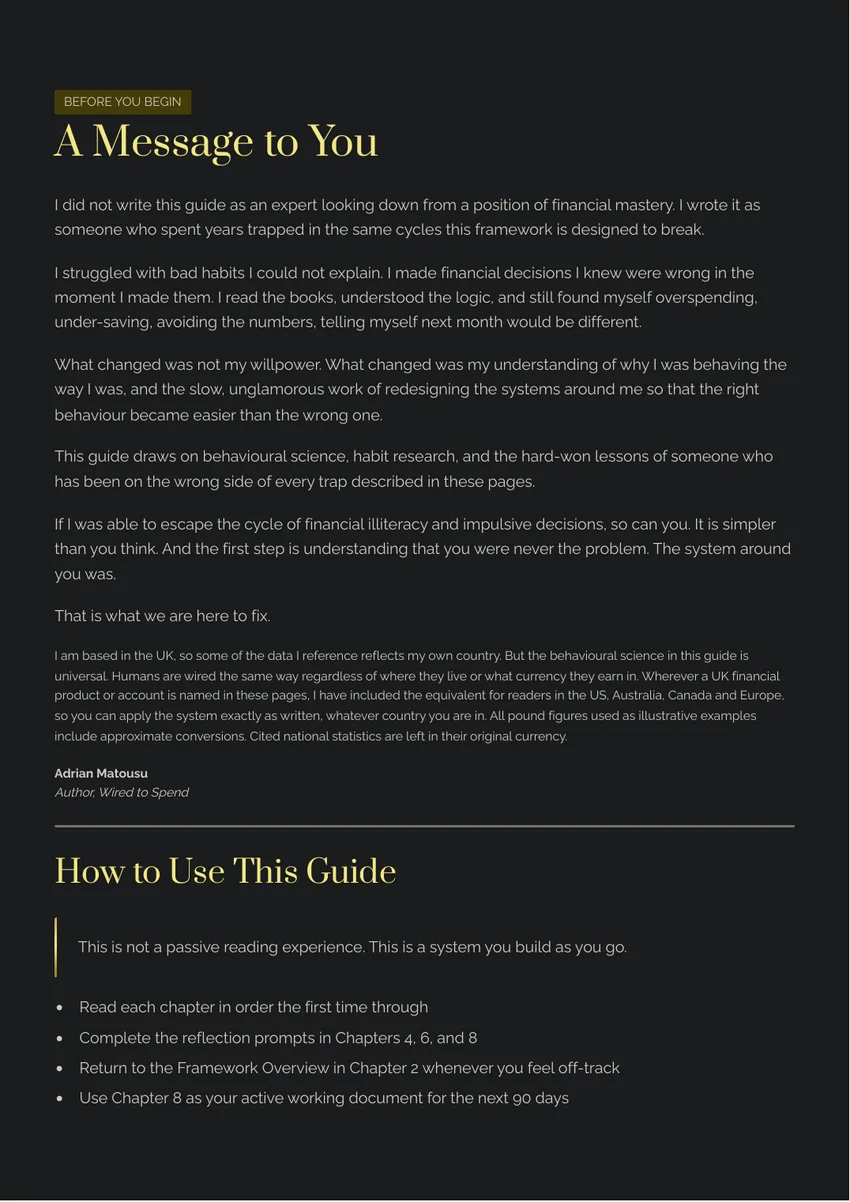
I did not write this guide as an expert looking down from a position of financial mastery. I wrote it as someone who spent years trapped in the same cycles this framework is designed to break.
I struggled with bad habits I could not explain. I made financial decisions I knew were wrong in the moment I made them. I read the books, understood the logic, and still found myself overspending, under saving, avoiding the numbers, telling myself next month would be different.
What changed was not my willpower. What changed was my understanding of why I was behaving the way I was, and the slow, unglamorous work of redesigning the systems around me so that the right behaviour became easier than the wrong one.
If I was able to escape the cycle of financial illiteracy and impulsive decisions, so can you. It is simpler than you think. And the first step is understanding that you were never the problem. The system around you was.
Adrian Matousu
“We do not rise to the level of our goals. We fall to the level of our systems.”
Get started
31 pages. 8 chapters. One behavioural framework built to close the gap between what you know and what you actually do.